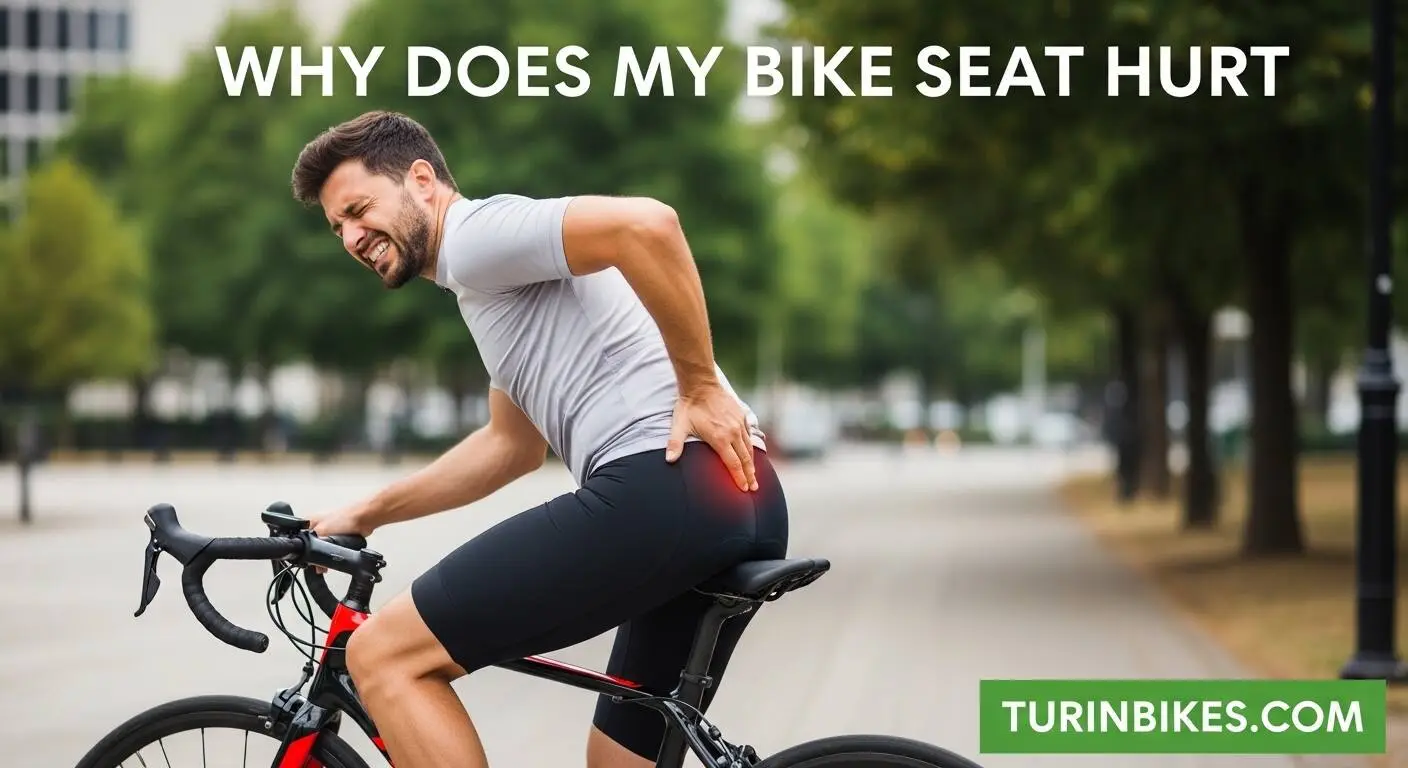
Bike seat pain is one of the most common reasons people stop riding, cut rides short, or assume cycling just is not for them. If you have ever wondered why does my bike seat hurt, you are not alone. New riders, commuters, indoor cyclists, and experienced road bike riders all deal with some level of saddle soreness at some point.
The good news is that bike seat pain is usually fixable.
In most cases, the problem comes down to a mix of bike fit, saddle choice, riding posture, clothing, hygiene, and adaptation. Sometimes the pain is mild and temporary as your body adjusts. Other times, it is a sign that something in your bike setup is off, or that your skin and soft tissue are under too much pressure.
In this guide, you will learn:
- why bike saddle pain happens
- the difference between normal soreness and a real problem
- how your saddle height, saddle tilt, and handlebar position affect comfort
- how to choose a better bicycle saddle
- whether bike shorts, chamois cream, or a gel seat cover can help
- when to seek medical advice for persistent or severe pain
If you have been asking why does bike seat hurt or why does my bike seat hurt my bum, this article will help you find the cause and the right fix.
Why Bike Seat Pain Is So Common?
A bicycle saddle is a very small contact point compared with the rest of your body. While riding, much of your body weight, movement, and pedal power gets transferred through that small surface. If pressure is not supported properly by your sit bones, the result can be discomfort in the bum, groin, inner thighs, lower back, or even numbness in the genital area.
Bike seat pain is common because many riders are dealing with one or more of these issues:
- the saddle is too narrow or too wide
- the saddle is too high or too low
- the saddle nose is tilted the wrong way
- the handlebars place too much weight on the saddle
- the rider is wearing the wrong shorts
- friction and moisture are irritating the skin
- the body is not yet adapted to riding
- posture, flexibility, or core weakness is increasing pressure in the wrong areas
Even a high quality bike saddle can cause pain if it does not match your anatomy or bike setup.
The Anatomy of Bike Seat Discomfort
To understand why the bike seat is so painful, it helps to know where pressure is supposed to go.
Sit Bones vs Soft Tissue
Your body is designed to bear seated pressure mainly through the ischial tuberosities, commonly called the sit bones. A well fitted bicycle saddle supports these bony points.
Pain starts when pressure shifts away from the sit bones and onto soft tissue, including:
- the perineum
- genital tissue
- pubic bones
- inner thighs
- surrounding skin and nerves
Too much pressure in these areas can reduce blood flow, increase numbness, and lead to irritation or saddle sores.
Common Types of Pain and What They Usually Mean
1. Deep ache in the bum or sit bones
This is often the most normal kind of early saddle soreness, especially for beginners or after returning to riding. Your tissues may need time to adapt.
Usually caused by:
- normal adaptation
- too much riding too soon
- hard saddle without enough acclimation
- poor support from shorts
2. Sharp pressure in the groin or numbness
This is not something to ignore. It often means the saddle shape, tilt, or position is putting too much pressure on soft tissue and affecting blood flow.
Usually caused by:
- saddle nose tilted too high
- saddle too narrow
- poor pelvic support
- reach to handlebars too long
- wrong saddle cutouts or wrong shape for your body
3. Chafing or skin irritation
This often feels like burning, rubbing, or raw skin.
Usually caused by:
- seams in clothing
- poor hygiene
- riding in non cycling underwear
- excessive moisture
- repeated friction
4. Lumps, pimples, or painful boils
These may be saddle sores, which are inflamed skin or hair follicles caused by friction, pressure, heat, and bacteria.
Usually caused by:
- poor hygiene
- dirty bike shorts
- too much time in a wet chamois
- repetitive rubbing
- poor saddle choice
Is Your Bike to Blame? Bike Fit Is Often the Real Issue
One of the biggest reasons people ask why does my bike seat hurt is because they assume the saddle itself is bad. Sometimes that is true, but very often the larger issue is bike fit.
A saddle that works perfectly on one bike can be painful on another if the rider position changes.
Saddle Height: The Foundation of Comfort
Saddle height has a major effect on how your hips move and how much pressure lands on the saddle.
If your saddle is too high
Your hips may rock side to side as you pedal. This creates friction and can quickly lead to saddle soreness, chafing, and soft tissue irritation.
Common signs:
- hips rocking
- reaching for the pedals
- pain on one side more than the other
- inner thigh rubbing
If your saddle is too low
A low saddle can overload the saddle with too much body weight and reduce efficient pedal power. It may also increase knee strain.
Common signs:
- feeling cramped
- too much weight pressing down into the saddle
- sore front of knees
- heavy pressure in the bum
A proper saddle height helps you pedal smoothly without rocking and keeps pressure more evenly distributed.
Saddle Tilt: Small Angle, Big Difference
Saddle tilt, or saddle angle, is often overlooked. A tiny adjustment can make a huge difference.
Nose too high
If the front of the bike saddle points upward too much, it can press into sensitive soft tissue and contribute to numbness or perineal pain.
Nose too low
If the saddle points too far downward, you may slide forward constantly and brace with your arms, shoulders, and core. This can also create hand pain and make you feel unstable.
For many riders, a nearly level saddle works well as a starting point. But personal anatomy matters, so fine tuning is important.
Fore Aft Saddle Position: Reach, Balance, and Pressure
Fore aft refers to how far forward or backward the saddle sits on the rails.
This affects:
- your balance over the pedals
- your reach to the bars
- weight distribution between saddle, hands, and feet
If the saddle is too far forward, you may feel crowded and put excessive pressure on your hands or front pelvic area.
If the saddle is too far back, you may overstretch and rotate your pelvis in a way that increases pressure in the wrong places.
This is one reason a random saddle swap does not always fix bicycle saddle pain. Position matters as much as the saddle itself.
Handlebar Position Can Also Cause Saddle Pain
Many riders do not realize the handlebars can contribute to saddle discomfort.
If your handlebars are too low or too far away, your pelvis may rotate more aggressively forward. That can increase pressure on the front of the saddle and soft tissue. On a road bike, this is especially common when riders copy an aggressive setup that suits racers but not their mobility or goals.
If the bars are too high or too close, you may sit more upright and load the rear of the saddle heavily through the sit bones. That is not always bad, but it can still create discomfort if the saddle width or shape is wrong.
Your saddle and handlebar positions work together. Looking at only one part of the bike setup often misses the real cause.
The Value of a Professional Bike Fit
A professional bike fit is one of the best investments you can make if pain keeps coming back. A trained fitter can assess:
- saddle height
- saddle tilt
- fore aft placement
- handlebar reach and drop
- cleat position if you use clipless pedals
- flexibility and posture
- how your body moves under load
This matters because bike seat pain is rarely solved by guesswork alone. A fitter can often spot issues that are hard to notice on your own.
If you ride often, train indoors on a stationary bike, or struggle with recurring numbness or saddle sores, a fit session can save you time, money, and frustration.
Choosing the Right Saddle: Width, Shape, and Features Matter
If your fit is close but the pain remains, your saddle choice may be the problem.
Saddle Width and Sit Bone Width
One of the most important factors is sit bone width. A saddle should support your sit bones instead of allowing them to hang off the edges or forcing the bones inward awkwardly.
A saddle that is too narrow may increase soft tissue pressure.
A saddle that is too wide may rub your inner thighs and cause chafing.
Many bike shops can measure sit bone width to help guide saddle width selection.
Saddle Shape
Different riders do better with different shapes:
- flat saddles often suit riders who move around a lot
- curved saddles may suit riders who stay in one position
- short nose saddles can reduce pressure for some riders
- saddles with a cutout may help reduce pressure in the center
There is no one best bicycle saddle for everyone. Comfort depends on your anatomy, flexibility, riding style, and bike setup.
Are Saddle Cutouts Helpful?
For many riders, saddle cutouts can reduce central pressure and improve blood flow. But not every cutout works for every body. In some cases, the edges of the cutout can create new pressure points.
That is why testing matters.
What About Extra Padding or a Gel Seat Cover?
A softer saddle is not always better.
Many people assume more cushion means more comfort, but overly soft saddles or a thick gel seat cover can actually increase pressure on soft tissue and create more movement and friction.
For short casual rides on a commuter bike or exercise bike, extra padding may feel fine.
For longer rides, a supportive saddle that matches your anatomy often works better than a very soft one.
The Unsung Hero: Padded Cycling Shorts
A good pair of bike shorts can make a dramatic difference.
Cycling shorts are designed to:
- reduce friction
- wick moisture
- provide pad support between your body and the saddle
- move with you while pedaling
For best results:
- wear cycling shorts without underwear
- choose a quality chamois that matches your riding duration
- make sure the shorts fit snugly without bunching
Loose shorts, seams, or underwear can rub and trap moisture, increasing the risk of saddle soreness and saddle sores.
Chamois Cream: Small Step, Big Relief
Chamois cream helps reduce friction and can be especially useful for:
- long rides
- indoor training
- hot weather
- riders prone to chafing
- people returning after time off the bike
It is not a cure for poor bike fit, but it can be a very effective support tool. Apply it to the skin, the chamois, or both depending on the product directions.
If you ride a stationary bike or exercise bike indoors, chamois cream can help even more because indoor riding often involves less natural movement and more continuous pressure.
Your Body Also Plays a Role
Sometimes the answer to why does my bike seat hurt my bum is not only the bike. It is also how your body interacts with the bike.
Posture, Core Strength, and Flexibility
A stable pelvis and strong core help you support your position without collapsing into the saddle.
If your core is weak or your flexibility is limited, you may:
- round your lower back
- rock on the saddle
- shift pressure to sensitive areas
- brace awkwardly through the arms and shoulders
Tight hamstrings and hip muscles can also affect pelvic rotation and comfort on the bike saddle.
Simple strength and mobility work can improve comfort over time.
Riding Technique: Movement Matters
Staying frozen in one position for too long increases pressure. Experienced riders naturally make small adjustments:
- they stand briefly on climbs
- shift hand positions
- move slightly on the saddle
- vary cadence and effort
This helps relieve pressure and restore circulation.
Indoor riders often suffer more because a stationary bike or exercise bike involves less movement, fewer bumps, less coasting, and fewer natural posture changes. As a result, the same tissue stays under pressure longer.
Stationary Bike vs Outdoor Bike Saddle Pain
A lot of people notice more pain indoors than outdoors.
Why indoor riding can hurt more
- fewer position changes
- constant pedaling
- more sweat and trapped moisture
- less airflow
- often a less refined bike setup
Why outdoor riding can still hurt
- poor road bike or commuter bike fit
- long time in the saddle
- rough surfaces
- wrong bicycle saddle for your body
If your indoor rides hurt much more, do not assume you just need to toughen up. Check the fit of the stationary bike and use proper shorts and a fan to reduce heat and moisture.
Can Poor Hygiene Cause Saddle Sores?
Yes. Poor hygiene is one of the most common contributors to saddle sores.
Sweat, bacteria, friction, and pressure create the perfect environment for skin irritation and infected follicles. If you stay in dirty or damp shorts after a ride, your risk goes up.
Hygiene tips to prevent saddle sores
- change out of bike shorts as soon as possible after riding
- wash shorts after every ride
- shower soon after riding
- keep the skin clean and dry
- avoid shaving if it increases irritation
- inspect your skin if you feel recurring hot spots
If you already have a saddle sore, reducing friction and keeping the area clean are essential.
Post Ride Care and Recovery
When your bike seat hurts, what you do after the ride matters too.
Try these recovery steps
- take a rest day if the skin feels raw or inflamed
- use clean, loose clothing after the ride
- apply a soothing cream if appropriate
- avoid another hard ride before the area settles
- check your saddle and shorts before riding again
If the discomfort is just mild sit bone soreness, it often improves as your body adapts.
If it is skin damage, a painful lump, numbness, or ongoing soft tissue pain, do not keep pushing through it.
Does Bike Saddle Pain Go Away?
Sometimes yes, but only if the cause is normal adaptation and not a setup problem.
Pain that may improve with adaptation
- mild sit bone tenderness in new riders
- minor soreness after the first few rides
- temporary discomfort after increasing ride time
Pain that usually needs a fix
- numbness
- sharp groin pain
- recurring saddle sores
- one sided pain
- pain that worsens every ride
- pain that lasts well after riding
Your body can adapt to some pressure. It should not have to adapt to the wrong pressure.
How Do I Stop My Bike Seat From Hurting?
If you want a practical action plan, start here.
1. Check your bike fit
Focus on saddle height, saddle tilt, fore aft position, and handlebar reach.
2. Make sure the saddle width fits your sit bones
A proper saddle width is one of the biggest comfort factors.
3. Wear quality cycling shorts
Proper bike shorts reduce friction and support your contact points.
4. Use chamois cream if needed
Especially helpful for long rides and indoor sessions.
5. Build ride time gradually
Do not jump from no riding to long sessions on a road bike or exercise bike.
6. Move around while riding
Stand up occasionally and vary your position.
7. Keep skin and shorts clean
Good hygiene lowers the chance of saddle sores.
8. Avoid assuming a softer saddle is the answer
Too much padding or a gel seat cover may make things worse on longer rides.
9. Consider a professional bike fit
If the problem continues, this is often the fastest way to solve it.
Is There a Way to Make a Bike Seat More Comfortable?
Yes, but the best solution depends on why it hurts in the first place.
Ways to make a bike seat more comfortable include:
- choosing the right bike saddle width
- testing different saddle shapes
- using saddle cutouts if they suit your anatomy
- adjusting saddle tilt
- improving handlebar position
- wearing padded shorts
- applying chamois cream
- strengthening your core and improving mobility
- reducing indoor heat with a fan
- increasing time on the bike gradually
Comfort usually comes from the right combination of support, fit, and friction control, not just more softness.
When to See a Doctor About Bike Saddle Pain
Most bike seat discomfort is not dangerous, but some symptoms should not be ignored.
Seek medical advice if you have:
- persistent numbness
- genital pain or loss of sensation
- severe swelling
- open sores or signs of infection
- a lump that does not improve
- fever with a painful skin lesion
- pain that continues even when you stop riding
- recurrent saddle sores that keep returning
Persistent pressure related numbness can affect blood flow and nerve function. Infections from saddle sores may also require treatment.
If something feels unusual, severe, or long lasting, get it checked.
What Are The Long Term Consequences of Ignoring Bike Saddle Pain
Riding through ongoing bicycle saddle pain can lead to:
- chronic skin irritation
- repeated saddle sores
- reduced enjoyment of cycling
- compensations that cause knee, back, neck, or hand pain
- nerve irritation from prolonged soft tissue pressure
The earlier you fix the cause, the easier it is to stay consistent and comfortable.
Key Takeaways: Your Action Plan
If you remember only a few things from this guide, make it these:
- bike seat pain is common but usually fixable
- your sit bones should carry most of the pressure
- bike fit matters just as much as the saddle itself
- saddle height, tilt, and fore aft position all affect comfort
- the right saddle width and shape are critical
- bike shorts and chamois cream help reduce friction
- poor hygiene can absolutely cause saddle sores
- indoor riding on a stationary bike often feels worse because pressure is more constant
- numbness, severe pain, or infected sores need medical attention
Final Thoughts: Find Your Comfort and Enjoy the Ride
If you have been asking why does my bike seat hurt, the answer is usually not that cycling is supposed to be miserable. It is usually that something needs adjustment.
The right bike setup, the right bicycle saddle, proper bike shorts, and better riding habits can transform your experience. Once pressure is supported by your sit bones, friction is controlled, and your position matches your body, riding becomes far more comfortable and enjoyable.
Do not settle for constant saddle soreness. Fix the cause, protect your skin, and give your body the support it needs. You deserve to ride in comfort and with confidence.
References and Sources
For accuracy and best practice, this article is based on guidance and research from respected sports medicine, cycling fit, and health organizations, including:
- American Academy of Orthopaedic Surgeons, cycling injury prevention and bike fit guidance
- Harvard Health Publishing, advice on cycling posture, overuse issues, and exercise safety
- Cleveland Clinic, skin irritation and folliculitis care principles relevant to saddle sores
- National Health Service, general guidance on boils, skin infections, and when to seek medical help
- International Bike Fitting Institute, professional bike fitting principles
- Peer reviewed research on cycling related perineal pressure, genital numbness, and saddle design in sports medicine and urology journals, including studies indexed in PubMed
- Bicycling and cycling industry fit resources from major saddle manufacturers that use sit bone width and pressure mapping methods

SEO Analyst & Bike Research Lead at TurinBikes
With over 5.5 years of experience in local & international SEO and affiliate marketing, Sachin has helped media sites and local businesses grow through data-driven strategies. He runs TurinBikes solo, creating transparent, evidence-based guides using thousands of verified user reviews, manufacturer specs, studies, and surveys – no personal ride tests, no sponsored bias. Focus: Honest recommendations for budget e-bikes and everyday riding needs. Full bio Click Here