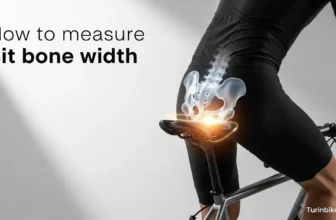
Nothing ends a good ride faster than a saddle that fights you the whole way. Numbness twenty minutes in, chafing by the halfway mark, a dull ache that lingers into the next day, none of that is normal, and none of it means you’re doing something wrong as a cyclist. It almost always means the saddle underneath you doesn’t match your body or the way you ride.
This guide walks through everything that actually matters when choosing a saddle: measuring your sit bones, matching width and shape to your riding style, understanding padding and materials, setting up your saddle correctly once you have it, and troubleshooting pain if it’s already showing up. Use the tools below to get a starting recommendation, then read through the sections that apply to you.
Quick Answer: How Do You Choose a Bike Saddle?
- Identify how and where you ride.
- Measure your sit bone width.
- Choose a saddle width that matches that measurement.
- Match the saddle’s shape to your riding position.
- Install it, test ride it, and adjust height, tilt, and fore-aft position before judging it.
Each of these steps gets its own section below.
Find Your Saddle in 60 Seconds
Answer five quick questions and get a starting recommendation for saddle width, shape, and padding:
- What bike do you ride? (Road, MTB, gravel, hybrid, e-bike, commuter, touring, cruiser)
- What’s your riding position? (Upright, moderate, aggressive/forward)
- How long are your typical rides? (Under 1 hour, 1 to 3 hours, 3+ hours)
- Do you know your sit bone width?
- What problem are you trying to solve? (Pain, numbness, chafing, too wide, too narrow, general comfort)
This won’t hand you a single product to buy. It’ll give you a starting set of characteristics, width range, shape, and padding density, so you can shop with actual direction instead of guessing.
What Is a Bike Saddle?
A bike seat is technically called a saddle, and the word isn’t just old-fashioned branding. Unlike a chair seat, a saddle is designed to support your pelvis and sit bones specifically, not your entire backside, while leaving room for your legs to drive the pedal stroke without interference.
That’s the core difference that trips people up when they’re new to cycling. A saddle that feels too firm or too narrow in a shop, sitting still, often turns out to be exactly right once you’re actually pedaling, because your weight distributes differently in motion than it does sitting on a display stand.
How to Choose a Bike Saddle
This is the decision making core of the guide. Work through it in order.
1. Start With Your Type of Riding
A road racer, a weekend gravel rider, and someone commuting five miles to work are not looking for the same saddle, even if their body measurements are identical. Road, mountain bike, gravel, hybrid, e-bike, commuting, and touring each pull your body into a different position on the bike, and saddle design follows that position.
2. Consider Your Riding Position
Your riding position roughly falls into three categories:
- Upright riders tend to do better with wider, more cushioned saddles, since more of your weight rests directly on your sit bones.
- Moderate positions, the most common setup for hybrid and commuter bikes, generally suit a mid-width, all-around saddle.
- Aggressive or forward positions, common on road bikes, shift weight forward and off the sit bones, which usually calls for a narrower, firmer design.
These are starting points, not fixed rules. Anatomy and the specific saddle model still matter more than the category alone.
3. Measure Your Sit Bones
This step matters more than almost anything else in this guide, and it gets its own full section below.
4. Choose the Right Saddle Width
Sit bone width and saddle width are related but not identical. A saddle typically needs to be a bit wider than your measured sit bone distance so your weight lands on the padded, supportive part of the saddle rather than the edge.
| Sit Bone Measurement | Starting Saddle Width | Typical Riding Position |
|---|---|---|
| Narrow (under 110mm) | 130–140mm | Aggressive |
| Medium (110–130mm) | 140–155mm | Moderate |
| Wide (over 130mm) | 155mm+ | Upright |
Treat this table as a starting range, not a fixed rule. Manufacturers measure and label saddle width differently from one brand to the next, so a 145mm saddle from one company can feel noticeably different from a 145mm saddle from another.
5. Choose Saddle Shape
Beyond width, shape plays a major role in how a saddle feels:
- Flat saddles allow more freedom to shift position during a ride but offer less built-in support.
- Curved saddles center your hips more consistently, which some riders prefer on longer rides.
- Short-nose designs have become increasingly common because they reduce pressure at the front of the saddle without sacrificing the ability to shift forward on climbs.
- Cut-out saddles, saddles with a channel or hole down the center, relieve direct pressure on soft tissue and the perineal area, a common source of numbness for many riders.
Your riding position and hip angle directly affect which shape actually works for you, which is why matching shape to position, not just picking whatever looks comfortable, produces better results.
Bike Saddle Size Guide
How Is Bike Saddle Size Measured?
Saddle size generally comes down to width, measured at the widest point of the rear of the saddle, and length, though width is by far the more important number for comfort. Manufacturers also account for usable seating area, which is why two saddles with the same listed width can still feel different.
Bike Saddle Size Chart
Use the sit bone to width table above as your starting reference point, then confirm against the specific saddle brand’s own sizing chart before buying, since sizing systems vary.
How to Read a Bike Saddle Size Chart
A 145mm saddle from one manufacturer will not necessarily feel identical to a 145mm saddle from another. Padding density, shell shape, and where the width is measured from all affect how a listed size actually translates to fit. Use size charts as a starting filter, not a guarantee.
Does Saddle Width Matter More Than Length?
For most riders, yes. Width is what determines whether your sit bones land on supportive material or slip off the edge, which is the root cause of most saddle discomfort. Length matters more for specific riding styles, like triathlon or time trial positions, where a shorter saddle nose reduces interference during an aggressive, aerodynamic posture.
How to Measure Your Sit Bones for a Bike Saddle
What Are Sit Bones?
Your sit bones, the two bony points at the base of your pelvis, are what should be bearing most of your weight while cycling, not your soft tissue. Finding a saddle that properly supports your sit bones is the single biggest factor in long term comfort.
Why Sit Bone Width Matters
If a saddle is narrower than your sit bone width, your weight shifts onto soft tissue and the perineal area instead of bone, which is where numbness, chafing, and pressure related pain usually come from. Too wide, and the saddle can cause rubbing against your inner thighs during the pedal stroke.
How to Measure Sit Bones at Home
- Use a firm piece of cardboard or corrugated material.
- Place it on a firm, flat surface, like a carpeted step.
- Sit down in your normal riding position, feet lifted as if pedaling.
- Let your full weight settle through your pelvis for a few seconds.
- Stand up carefully without shifting the cardboard.
- Find the center of each of the two indentations left behind.
- Measure the distance between those two center points. That’s your sit bone width.
Can You Measure Sit Bones Without a Bike?
Yes. The cardboard method above doesn’t require a bike at all, just a firm surface and a few minutes. Some bike shops also offer a pressure-mapping pad for a more precise reading if you want a second data point.
Sit Bone Measurement vs Hip Width
These are not the same thing, and it’s an easy mix-up. Hip width is a broader measurement of your pelvis; sit bone width is specifically the distance between the two bony points that bear weight while seated. Saddle sizing is based on sit bone width, not overall hip width.
What If You’re Between Two Saddle Sizes?
When your measurement falls between two standard widths, most riders do better sizing up slightly rather than down. A saddle that’s marginally too wide is usually more comfortable than one that lets your sit bones slip off the supportive edge.
Bike Saddle Width Guide
Narrow vs Medium vs Wide Saddles
Narrow saddles suit aggressive, forward riding positions where less weight sits directly on the sit bones. Medium widths cover the largest range of riders and riding styles. Wide saddles suit upright positions where the sit bones carry most of your body weight.
Does a Wider Saddle Mean More Comfort?
Not automatically, and this is one of the more common myths in saddle shopping. A saddle needs to be wide enough to properly support your sit bones, but going wider than necessary can cause chafing against your thighs during the pedal stroke and doesn’t add meaningful comfort once your sit bones are already properly supported.
Can a Saddle Be Too Wide?
Yes. Beyond the correct support width, extra width mostly adds rubbing and restricted leg movement rather than comfort.
Can a Saddle Be Too Narrow?
Also yes, and this is the more common mistake. A saddle narrower than your sit bone width forces your weight onto soft tissue instead of bone, which is a direct path to numbness and pain.
Types of Bicycle Saddles
| Saddle Type | Best For | Typical Characteristics |
|---|---|---|
| Road performance | Road cyclists | Lightweight, minimal padding, built for an aggressive position |
| Mountain bike | Trail and cross-country riders | Durable cover, room to move during technical terrain |
| Gravel | Gravel and mixed-terrain riders | Balances comfort with control |
| Touring | Long-distance riders | Extra support for multi-hour days in the saddle |
| Commuter | Daily, shorter rides | Moderate cushioning, practical durability |
| Comfort/cruiser | Upright riding | Wide, heavily padded |
| E-bike | E-bike riders | Depends heavily on posture and how the bike is used |
| Triathlon/time trial | Aero riding | Narrow, short-nose, built for a forward aerodynamic position |
Road Bike Saddle Guide
A good road bike saddle prioritizes efficient power transfer and minimal padding, since excess cushioning can actually reduce performance on longer, sustained efforts. Road saddles tend to run narrower than mountain bike saddles because the forward, aggressive position shifts weight off the sit bones.
Short-nose designs have become the standard on many newer road saddles because they reduce front-end pressure without limiting your ability to shift forward on climbs. Whether to choose a cut-out design comes down to personal sensitivity to pressure on soft tissue; some riders need it, others don’t notice a difference either way.
If you’re newer to road riding, start with a mid-firmness saddle rather than the most minimally padded option, and give it real test-ride time before judging it. See our dedicated guide to the best road bike saddles for specific model recommendations.
MTB Saddle Guide
Mountain bike saddle design differs from road saddles mainly because of movement. On technical trails, you’re constantly shifting your weight forward, back, and side to side, sometimes off the saddle entirely, so MTB saddles tend to be shorter, tougher, and built with a covering that can handle contact with your shorts during aggressive moves.
Cross-country riders generally lean toward narrower, firmer saddles closer to road specs, since XC riding stays closer to a seated position. Trail and enduro riders often prefer a bit more padding and a shorter nose, since they’re in and out of the saddle constantly. See our dedicated MTB saddle picks for specific recommendations.
E-Bike, Hybrid & Commuter Saddle Guide
E-bikes and commuter bikes usually put riders in a more upright position than road or aggressive mountain biking, which shifts more weight directly onto the sit bones. That generally calls for a wider saddle with moderate to generous padding.
More padding isn’t automatically better here either. For daily commuting or regular e-bike use, a well-shaped saddle with the right width often outperforms a heavily cushioned one, since excess soft padding can compress unevenly and create its own pressure points over repeated short rides.
Saddle Materials & Features
Shell: The base structure of the saddle, usually a firm plastic or composite, that everything else is built on.
Rails: The mounting bars that attach the saddle to your seatpost. Options range from steel, the heaviest and most affordable, through chromoly, to titanium and carbon, which cut weight at a higher price.
Padding: Foam padding comes in a range of densities. Higher-density foam holds its shape better on long rides, while softer, lower-density foam feels plush initially but can compress and cause pressure over time. Gel padding conforms closely to your shape and adds comfort, though it typically adds weight compared to foam.
Cover materials: Saddle covers range from synthetic leather to more technical, breathable fabrics, mostly affecting durability and how the surface handles sweat and moisture.
Cut-outs and pressure relief channels: These reduce direct pressure on the perineal area, and they’re especially common on women’s saddles, since anatomy makes this a more frequent pain point.
Does more padding mean more comfort? Not necessarily, and not on longer rides. Excess soft padding compresses under sustained pressure and can push up into the very soft tissue it’s meant to protect. Firmer, well-shaped padding often outperforms thick, soft padding once you’re several hours into a ride.
How to Set Up Your Bike Saddle Correctly
A genuinely well-fitting saddle can still feel wrong if it isn’t positioned correctly. Before blaming the saddle itself, check these three things.
Saddle height: With one heel on the pedal and your leg fully extended at the bottom of the pedal stroke, your leg should be nearly straight without your hip rocking.
Fore-aft position: With a pedal at the 3 o’clock position, a line dropped straight down from the bony point below your kneecap should land roughly on the pedal axle.
Tilt: Most riders do best starting level or very slightly nose-down. Tilting the nose down too far shifts extra weight onto your hands and wrists.
Signs your saddle is too high: Hips rocking side to side while pedaling, or reaching with your toes at the bottom of each stroke.
Signs your saddle is too low: Knee pain at the front of the joint, or a feeling of pedaling with bent, cramped legs.
Signs your saddle is too far forward: Persistent pressure on your hands, or knee pain toward the front.
Signs your saddle is too far back: Feeling like you’re constantly reaching for the handlebars, or pain toward the back of the knee.
Why Does My Bike Saddle Hurt?
| Problem | Possible Cause | First Thing to Check |
|---|---|---|
| Sit bone pain | New saddle, still adapting, or wrong fit | Width and riding position |
| Numbness | Excess pressure or poor position | Saddle shape and tilt |
| Chafing | Wrong width or shape | Saddle width |
| Sliding forward on the saddle | Tilt or fore-aft position | Saddle angle |
| Hips rocking while riding | Incorrect height | Saddle height |
A new saddle can take a short adjustment period even when it’s the right one, but pain that doesn’t ease after a few rides usually means something needs to change, width, shape, tilt, or height. Persistent numbness or ongoing pain that doesn’t resolve with these adjustments is worth discussing with a professional bike fitter or, if the discomfort continues, a medical provider.
Bike Saddle Calculator
[Saddle Size Calculator tool goes here]
Enter your sit bone width, riding position, and bike type to get a suggested saddle width range.
[Saddle Height Calculator tool goes here]
A separate tool, since saddle width and saddle height are two different calculations based on different measurements (sit bones for width, inseam and leg length for height).
Best Bike Saddle for Different Riders
Saddle selection should start with your anatomy, riding position, and how you actually use your bike, rather than gender labels alone. Many riders do perfectly well on a unisex saddle, and some women prefer a men’s saddle or vice versa, depending on their individual sit bone width and riding style. Women’s saddles are generally built wider with larger cut-outs, since women on average have a wider sit bone structure than men, but that’s a starting tendency, not a rule for every body.
For specific picks based on your riding style, see our dedicated guides:
- Best Road Bike Saddles
- Best MTB Saddles
- Best Bike Saddles for Beginners
- Best Saddles for Long-Distance Cycling
- Best E-Bike Saddles
- Best Bike Saddles for Men
- Best Bike Saddles for Women
Bike Saddle Buying Guide
How much should you spend? Decent saddles start in the $30 to $50 range and climb well past $200 for carbon-railed, premium options. For most riders, spending more buys weight savings and marginal material upgrades rather than a dramatically more comfortable ride.
Does an expensive saddle make a difference? Sometimes, mainly through lighter materials like carbon rails, but comfort has more to do with correct width and shape than price point.
What’s actually worth paying for? A saddle shape and width that genuinely matches your body, tested through real riding, is worth more than any premium material upgrade.
Carbon vs steel rails: Carbon saves meaningful weight at a real price premium; steel is heavier but durable and budget-friendly.
Gel vs foam: Gel offers more initial plushness and conforms closely to your shape; foam, particularly higher-density foam, tends to hold up better on longer rides without compressing.
Can you return or test a saddle? Many bike shops and some manufacturers offer test or return programs given how personal saddle fit is. Take advantage of these whenever they’re available rather than committing blind.
Common Bike Saddle Mistakes
- Buying the softest saddle available, assuming more cushioning always means more comfort.
- Choosing based on price alone, without checking width or shape.
- Picking the same saddle as a friend or teammate, ignoring that your bodies and riding styles differ.
- Ignoring sit bone width entirely and guessing at size.
- Assuming a wider saddle is automatically the safer, more comfortable choice.
- Overlooking saddle height and position after installing a genuinely well-fitting saddle.
- Judging a new saddle after a single short ride, before your body has had time to adjust.
How We Evaluate Bike Saddles
When we recommend saddles on TurinBikes, we evaluate them against a consistent set of factors: riding discipline, saddle width, sit bone support, riding position, shape and profile, padding type and density, pressure relief design, materials, weight, durability, available user feedback, manufacturer specifications, and value for money, including return or test-ride policies where they exist.
We don’t claim to have personally tested every saddle mentioned across this site. Where a saddle has been genuinely tested or reviewed by our team, that’s noted directly on the relevant page. This guide is written and maintained by the TurinBikes editorial team, and reviewed for accuracy against current manufacturer and industry resources.
Frequently Asked Questions
What is a bike seat called?
A bike seat is called a saddle, a term that reflects how it’s designed to support the rider’s pelvis and sit bones, rather than the entire body the way a standard chair seat does.
How do I choose a bike saddle?
Start by identifying your riding type and position, measure your sit bone width, choose a matching saddle width, and select a shape suited to your riding position. Then install and test ride it before making a final judgment, since fit and setup both affect how a saddle actually feels.
How do I know what saddle size I need?
Measure your sit bone width using the at-home cardboard method, then match that measurement against a size chart, keeping in mind that width matters more than length for most riders.
How do I measure my sit bones for a bike saddle?
Sit on a piece of firm cardboard placed on a hard surface in your normal riding position, let your weight settle, then measure the distance between the centers of the two indentations left behind.
What bike saddle width do I need?
Your ideal width generally runs slightly wider than your measured sit bone distance, so your weight lands on supportive material rather than the saddle’s edge.
Are wider bike saddles more comfortable?
Only up to the width that properly supports your sit bones. Beyond that point, extra width tends to cause thigh rubbing rather than added comfort.
What is the best saddle for cycling?
There’s no single best saddle for every cyclist. The right choice depends on your sit bone width, riding position, and the type of riding you do most.
Does saddle shape matter?
Yes. Flat, curved, short-nose, and cut-out designs each support the body differently, and matching shape to your riding position is just as important as getting the width right.
Is a gel saddle better than a foam saddle?
Neither is universally better. Gel offers more immediate plushness; higher-density foam often holds up better over long rides without compressing into pressure points.
Should a bike saddle have a cut-out?
It depends on your individual sensitivity to pressure on soft tissue. Some riders find real relief from a cut-out; others don’t notice a meaningful difference.
How high should my bike saddle be?
Your leg should be nearly fully extended, without hip rocking, when your heel is on the pedal at the bottom of the stroke. Precise height also depends on your leg length and cleat setup.
Can a bike saddle be too wide?
Yes. Beyond your support width, extra width mainly adds thigh rubbing and restricts leg movement during the pedal stroke.
Can a bike saddle be too narrow?
Yes, and this is more common than being too wide. A narrow saddle shifts weight off your sit bones and onto soft tissue, a frequent cause of numbness and pain.

Sachin Kadwal is the founder of TurinBikes, with 5.5+ years in SEO and digital research. He rides regularly and creates honest, data-backed bike guides based on verified reviews and real-world testing.”